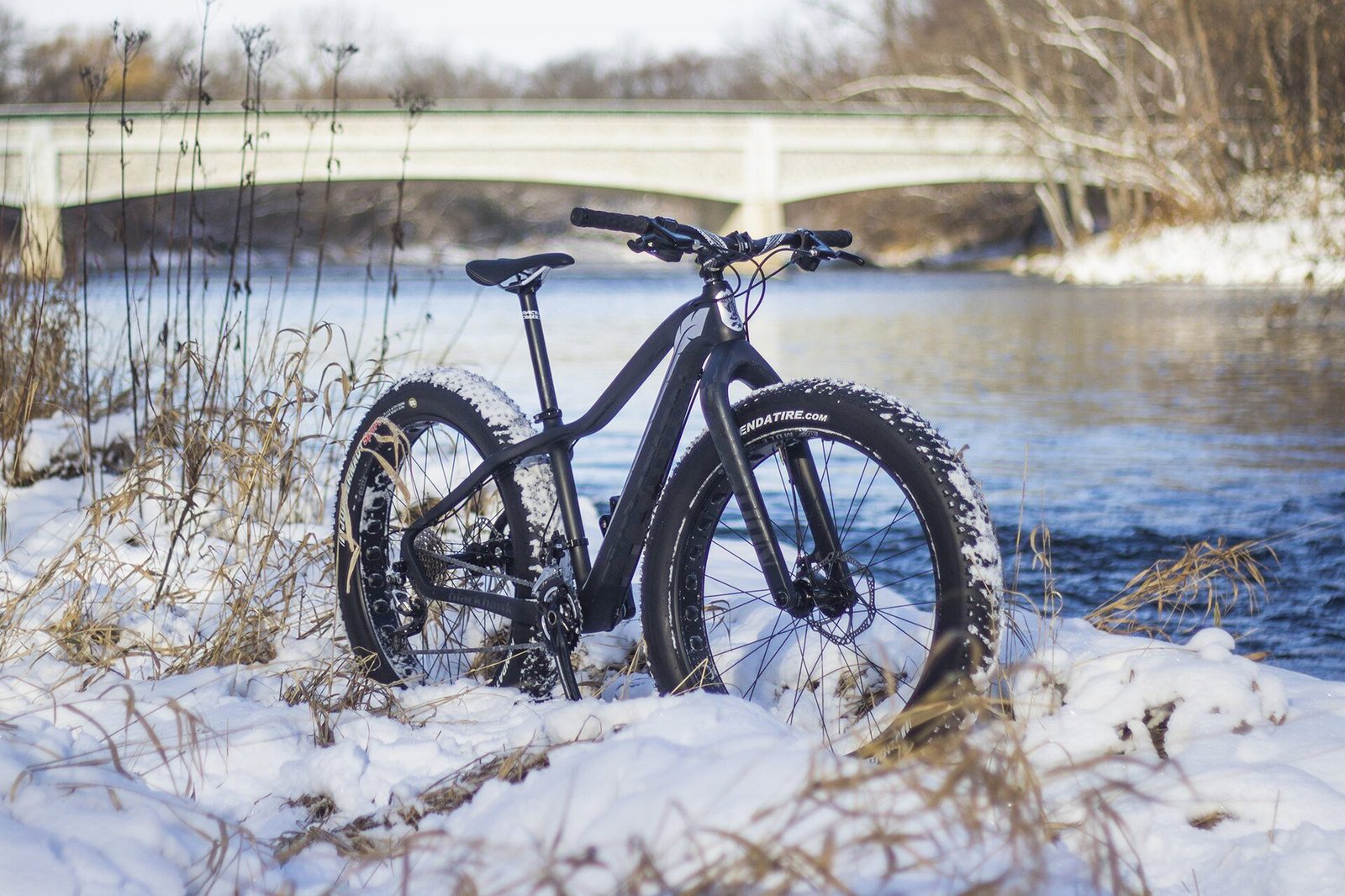
Snow is where fat tires go from novelty to necessity. With the right setup and expectations, packed snow and groomed trails are genuinely rideable — and magical. Here's the complete winter guide.
The snow setup
- Tires at 5–8 PSI — float is everything; consider studded tires for ice
- Battery indoors: cold cuts range 20–30%; store and charge warm, let it warm on the ride
- Fenders: slush spray is worse than rain
- Lights: winter means riding in the dark — go bright
- Lower the saddle slightly for confident foot-dabs
Technique
Steady and smooth: sudden power spins the rear wheel — use low assist and high cadence. Stay loose: let the bike float; fighting it digs you in. Know when to walk: deep powder defeats everything; groomed and packed surfaces are the playground.
E-bike battery care: the complete routine
Your battery is the most expensive replaceable part on the bike ($300–$800). Treat it well and it lasts years; abuse it and you'll be shopping sooner than you'd like.
- Charge between 20% and 80% for daily use. Full 100% charges are fine before a long ride, but don't leave the battery sitting at 100% for days.
- Never run it to zero regularly. Deep discharges stress lithium cells far more than partial ones.
- Use the stock charger. Third-party chargers with wrong voltage profiles kill batteries (and occasionally start fires).
- Charge at room temperature. Don't charge a freezing-cold battery — let it warm up indoors first.
- Store at 40–60% charge in a cool, dry place if you won't ride for weeks.
- Keep the contacts clean and the charging port covered.
Heat is the silent killer — don't leave the battery baking in a car trunk in July.
Frequently asked questions
How cold is too cold for an e-bike battery?
Riding in cold is fine (the battery warms itself); charging a frozen battery damages it. Always warm the battery to room temp before charging.
Do I need studded tires?
For ice, yes — nothing else grips. For packed snow, regular fat tires at low pressure work well.